TLEA History
A History of TLEA from 1971-Present
A History of TLEA from 1971-Present
How TLEA was formed
TLEA’s beginnings go back to 1970, when a Bates College professor received a grant to measure the water quality of several Maine lakes, including Thompson Lake. The water quality survey quickly led to interest among lakeshore owners in forming an organization that would be responsible for future activities promoting the health of the lake. The first issue of the Observer contained the results of the survey and inquired if recipients might be interested in starting an association to continue the lake monitoring. The response was strong enough to convene organizing a meeting. The meeting took place on August 28, 1971, over 150 individuals assembled to create the Thompson Lake Environmental Association, with Erland Starbird serving as first president.
Original Mission
Starbird’s first president’s message includes a statement of TLEA’s mission which has changed little since he wrote it in 1971: “It seems reassuring that there is in fact, an Environmental Association aimed primarily at protecting the ecology and water quality in and around Thompson Lake. The increase of population along, and close to the lake shore, has made it imperative that some sort of surveillance and control be exercised if Thompson Lake is to remain the clear, beautiful body of water that it is today.” Among TLEA’s responsibilities he lists monitoring water quality, future development, waste and sewage disposal systems, and boating traffic and safety. In the decades since TLEA was organized, those specific goals have shifted somewhat. Over the years the directors have placed more emphasis on general oversight and on public education, leaving the enforcement of the Shoreland Zoning rules to the code enforcement officers of the four towns bordering the lake. During these years TLEA also increased its role in publicizing “best management practices” for watershed residents, solving soil erosion problems, and combating the introduction and spread of invasive aquatic plants.
Grant Funding and Watershed Surveys
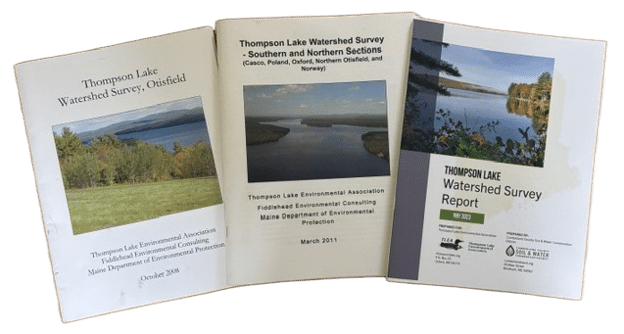 Several grant programs funded by the federal government have stimulated TLEA’s efforts to maintain the exceptional quality of the lake. From 1993 to 1997, under long-term TLEA president Margaret Slattery, federal funds supported a summer Job Training Program for at-risk youth to repair camp roads. In 1994 lake biologist Scott Williams led TLEA volunteers in a watershed survey of soil erosion sites. This resulted in a federally funded 3-year grant to implement several important projects, including repairs to boat landings and town roads in Casco, Otisfield, Oxford, and Norway.
A 1999 survey of the remainder of the watershed identified 125 more erosion sites and resulted in a second federal grant, managed by Williams. This grant produced a Watershed Management Plan, completed in 2000. From 2001-2003, another federal grant, this one for more implementation projects, was managed by Phoebe Hardesty of Androscoggin Valley Soil and Water Conservation District. In the spring of 2008, realizing that TLEA’s surveys of soil erosion sites were outdated and incomplete, the Association itself funded a new survey of the Otisfield section of the watershed. In 2009, we followed with a survey of the Casco and Poland sections, and in 2010 we completed the 3-year project by concentrating on surveying the Oxford portion watershed.
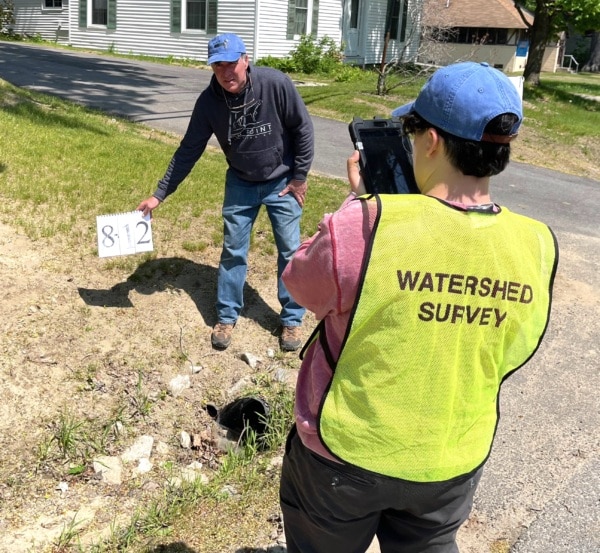
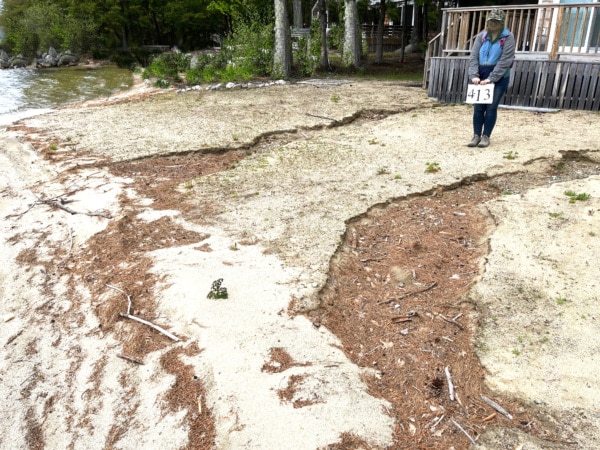
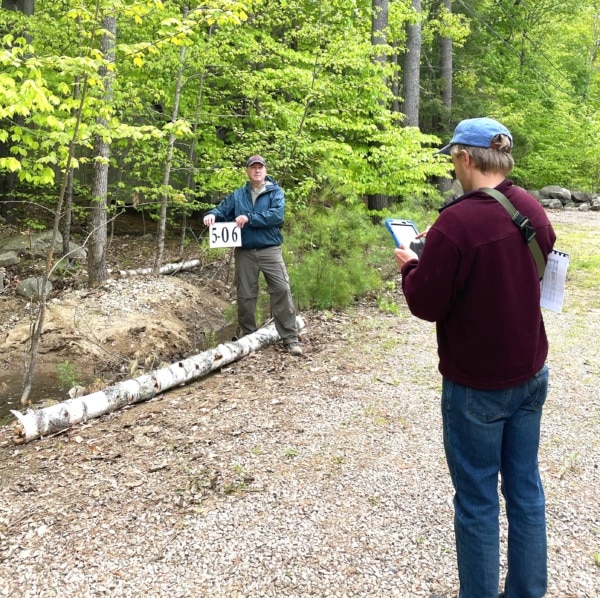
In 2023, TLEA undertook another watershed survey with guidance from the Androscoggin Valley and Oxford County Soil and Water Conservation Districts and the Maine Department of Environmental Protection. The entire watershed was surveyed, and a comprehensive report was developed identifying 299 sites of high, medium and low erosion. Outreach to properties identified in the survey was conducted to offer cost share assistance for remediation work from grant funding. Several large gravel road projects were completed along with many smaller scale projects completed by our Youth Conservation Corps and homeowners. TLEA is eligible to apply for 319 federal grants for 10 years after the completion of the 2023 watershed survey. 319 grant applications are on hold for the 2027 cycle, and hopefully federal policy will change and funds will once again be available.

Youth Conservation Corps
TLEA’s Youth Conservation Corps began in 2002 because of recommendations made in TLEA’s 2000 Watershed Management Plan. The YCC consists of a coordinator, crew chief, and a 3–5-person crew of high school age students who spend eight weeks doing hand labor to solve erosion problems around the watershed, primarily on residential property. For the first few years the YCC was funded through 319 federal grants, grants from the four towns bordering the lake and grants from private foundations. In later years, TLEA member support and non-government grants have funded the YCC Program.
Because the undertaking of the 2023 Watershed survey, TLEA secured a new batch of 319 federal grants which covered a portion of YCC costs in 2024 and 2025. This covered the cost of labor requiring homeowners to cover the cost of project materials. The YCC is overseen by the Maine Department of Environmental Protection and focuses on a handful of Best Management Practices; vegetated buffers and rain gardens, infiltration trenches, rubber razor bars, box culverts and erosion control mulching.
The YCC took a brief hiatus during 2020-2022 due to the pandemic. Board member Jim Skinner restarted the program in 2023, providing countless hours of support. Since 2002 the YCC can lay proud claim on the completion of more than 350+++ erosion control projects, benefiting the lake beyond measure.


Courtesy Boat Inspection
In 2002, before the state began funding Courtesy Boat Inspection programs, TLEA responded to public concerns about the spread of variable leaf milfoil and other harmful invasive aquatic plants. That summer the Association mounted an emergency inspection program of its own, stationing weekend volunteers at boat launches around the lake to warn boaters of the dangers of invasive plants.
Now with supplemental funding from the State, this program continues each summer. We employ at least 4 Courtesy Boat Inspectors each year to staff the 4 public boat launches on the lake from Memorial Day to Labor Day. The Inspectors educate boaters about invasive species while inspecting boating entering and leaving the lake. Data from each inspection is stored in a statewide database overseen by the Maine Department of Environmental Protection. Between the 4 boat launches we average approximately 1,000 boat inspections per season.
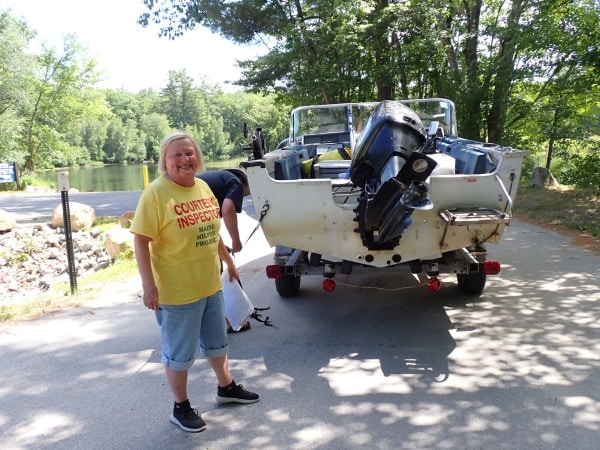
Jennifer Null (Pictured below) has been a Courtesy Boat Inspector on Thompson Lake at the Thompson Lake Marina in Casco for 17 years in a row.




Invasive Species Management
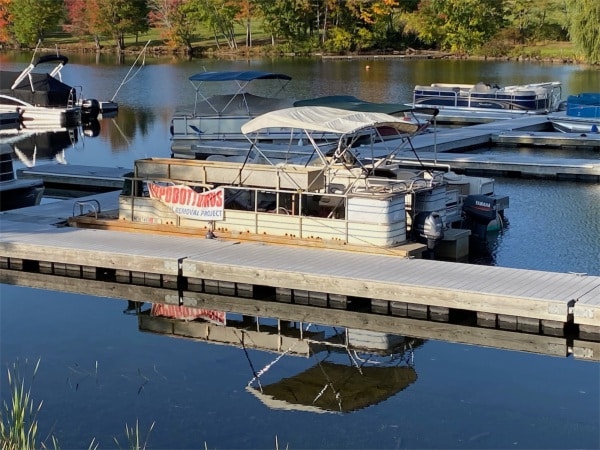
In 2004 Scott Bernardy, who at the time was chair of TLEA’s Environmental Committee, began educating and organizing a group of volunteers to serve as an Invasive Plant Patrol, an ongoing program to monitor the existence and spread of invasive plants. In 2005 TLEA worked to eradicate milfoil from Thompson by using benthic barriers to smother the invasive weeds in certain coves. In the summer of 2008 TLEA directors authorized the purchase and outfitting of a pontoon boat to fight the milfoil more aggressively. That summer the Association contracted with a crew of divers, who hand pulled 44,000 pounds of milfoil in ten weeks’ work. Encouraged by this successful start, TLEA’s directors in the winter of 2008-09 authorized a major initiative to raise enough funds to continue the pontoon boat’s work for six more years.
In 2017, TLEA undertook a major capital campaign to remove invasive milfoil from a 10 acre area of the lake at Pine Point in Oxford. The campaign raised over $450,000 which funded a 5+ year effort, with divers installing benthic tarps atop the milfoil, depriving it of sunlight. After 5 years of relocating tarps, the Pine Point area is being controlled, allowing natural vegetation and fish life to return.
TLEA annually hires Southern Maine Invasive Aquatic Management to work on the lake for the summer months. The crew surveys the lake for invasive species, particularly milfoil, and maps out areas of concern. The crew spends 10+ weeks a summer removing milfoil by hand pulling, using a DASH suction device or laying benthic barriers.
In 2025 the Maine Department of Environmental Protection accompanied the milfoil crew and TLEA board members on a survey of the lake. It was advised by the DEP to concentrate our removal efforts for 2026 in Greeley Brook, a stream in Oxford that directly flows into the Pine Point cove of the lake under a causeway on route 121. In 2026 TLEAs milfoil crew extended the amount of time they spent working on Thompson Lake to address the issue of milfoil in Greeley Brook, which was a costly undertaking. The crew placed benthic barriers on a half-acre infestation of milfoil in Greeley Brook which will remain overwinter and be removed in early summer of 2027. vbfgs




LakeSmart:
TLEA partnered with Maine Lakes in 2021 as part of the LakeSmart Program. LakeSmart is a statewide outreach program through Maine Lakes that educates lakefront homeowners to manage their land to protect water quality. The program is free, non-regulatory, and voluntary. Participating homeowners receive individualized suggestions for keeping pollutants from stormwater out of lake water. TLEA board member volunteers are trained in property evaluation techniques and best management practices to be able to identify sources of erosion on lakeside properties. TLEA’s LakeSmart team is one of the busiest in the state, as of 2026 the team performed a total of 140 evaluations and given 42 LakeSmart awards to Thompson Lake property owners. Previous TLEA board member and President, Ron Armontrout, is credited for overseeing the development of the LakeSmart Program on Thompson Lake from 2021-2025.


Loon Count:
TLEA has participated in the Maine Audubon Annual Loon Count since it began in 1983. The Loon Count takes place on the 3rd Saturday in July. TLEA organizations volunteer to survey the lake for Loons and Loon chicks and report back data to the Maine Audubon. The Lake is broken up into 17 quadrants and a volunteer is assigned to each quadrant to ensure the entire lake is surveyed and that no Loon is counted twice. TLEA board member Peggy Dorf has been in charge of organizing the Loon count for over 25 years. Peggy took over for former board member and President, Margaret Slattery, who ran the Loon Count before 2002.

Today, TLEA’s programs include water quality testing, including serial Secchi disc readings and an annual water quality assessment by a limnologist, watershed surveys to identify areas of erosion and assistance helping property owners deal with erosion and runoff issues, annual surveying and removal of milfoil and invasive species, courtesy boat inspection at public launches, Youth Conservation Corps, LakeSmart, education and publishing TLEA’s newsletter, the Observer.
With an all-volunteer Board of Directors, TLEA manages an ambitious and broad array of programs for an organization that began so modestly nearly fifty years ago.
Thanks to our members’ support, our Board of Directors and Committee Chairpersons, and our leadership, TLEA is recognized as a leading lake and environmental association in the State of Maine. Many thanks to all our valued Members, many of whom have supported TLEA for over 25 years!